A History of Christianity

The history of Christianity is really the history of Western civilization. Christianity has had an influence on society through art, language, politics, law, family life, calendar dates, music, and even the way we think have been colored by Christian influence for nearly two thousand years.

The Beginning of the Church
The church began 50 days after Jesus’ resurrection. Jesus promised that He would build His church (Matthew 16:18), and with the coming of the Holy Spirit on the day of Pentecost (Acts 2:1-4), the church officially began. Three thousand people responded to Peter’s sermon that day and chose to follow Christ (Acts 2:41).

The initial converts to Christianity were Jews or proselytes to Judaism, and the church was centered in Jerusalem. Because of this, Christianity was seen at first as a Jewish sect (similar to the Pharisees, the Sadducees, or the Essenes). But what the apostles preached was radically different from what other Jewish groups were teaching. Jesus was the Jewish Messiah (the promised deliverer) who had come to fulfill the Law (Matthew 5:17) and institute a new covenant based on His death (Mark 14:24). This message, with its charge that they had killed their own Messiah (Acts 2:36), infuriated many Jewish leaders, and some, like Saul of Tarsus, took action to stamp out “the Way” (Acts 9:1-2).

It is proper to say that Christianity has its roots in Judaism, because the Old Testament laid the groundwork for the New Testament. It is impossible to fully understand Christianity without a working knowledge of the Old Testament (see the books of Matthew and Hebrews). The Old Testament explains the necessity of a Messiah, contains the history of the Messiah’s people, and predicts the Messiah’s coming. The New Testament is all about the coming of Messiah and His work to save us from sin. In His life, Jesus fulfilled over 300 specific prophecies, proving that He was the One the Old Testament had anticipated.

The Growth of the Early Church
Not long after Pentecost, the doors to the church were opened to non-Jews. The evangelist Philip preached to the Samaritans (Acts 8:5), and many of them believed in Christ. The apostle Peter preached to the Gentile household of Cornelius (Acts 10), and they, too, received the Holy Spirit. The apostle Paul (the former persecutor of the church) spread the gospel all over the Greco-Roman world, reaching as far as Rome itself (Acts 28:16) and possibly all the way to Spain.

By A.D. 70, the year Jerusalem was destroyed, most of the books of the New Testament had been completed and were circulating among the churches. For the next 240 years, Christians were persecuted by Rome (sometimes at random, sometimes by government orders).

In the 2nd and 3rd centuries, the church leadership became more and more hierarchical as numbers increased. Several heresies were exposed and refuted during this time, and the New Testament canon was agreed upon. Persecution continued to intensify.

The Rise of the Roman Church
In A.D. 312, the Roman Emperor Constantine claimed to have had a conversion experience. About 70 years later, during the reign of Theodosius, Christianity became the official religion of the Roman Empire. Bishops were given places of honor in the government, and by A.D. 400, the terms “Roman” and “Christian” were virtually synonymous.

After Constantine, Christians were no longer persecuted. In time, it was the pagans who came under persecution unless they “converted” to Christianity. These forced conversions led to many people entering the church without a true change of heart. The pagans brought with them their idols and their familiar practices, and the church changed. Icons, elaborate architecture, pilgrimages, and the veneration of saints were added to the simplicity of early church worship. About this same time, some Christians retreated from Rome, choosing to live in isolation as monks, and infant baptism was introduced as a means of washing away original sin.

Through the next centuries, various church councils were held in an attempt to determine the church’s official doctrine and to make peace between warring factions. As the Roman Empire grew weaker, the church became more powerful, and many disagreements broke out between the churches in the West and those in the East. The Western (Latin) church was based in Rome and claimed apostolic authority over all other churches. The bishop of Rome had even begun calling himself the “Pope” (the Father). This did not sit well with the Eastern (Greek) church, based in Constantinople. Theological, political, procedural, and linguistic divides all contributed to the Great Schism in 1054, in which the Roman Catholic (“Universal”) Church and the Eastern Orthodox Church excommunicated each other and broke all ties.

The Middle Ages
During the Middle Ages in Europe, the Roman Catholic Church continued to hold power, with the popes claiming authority over all levels of life and living as kings. Corruption and greed in the church leadership was commonplace. From 1095 to 1204 the popes endorsed a series of bloody and expensive crusades in an effort to repel Muslim advances and liberate Jerusalem.

The Reformation
Through the years, several individuals had tried to call attention to the theological, political, and human rights abuses of the Roman Church. All had been silenced in one way or another. But in 1517, a German monk named Martin Luther took a stand against the church, and everyone heard. With Luther came the Protestant Reformation, and the Middle Ages were brought to a close.

The Reformers, including Luther, Calvin, and Zwingli, differed in many finer points of theology, but they were consistent in their emphasis on the Bible’s supreme authority over church tradition and the fact that sinners are saved by grace through faith alone apart from works (Ephesians 2:8-9).

Although Catholicism made a comeback in Europe, and there were a series of wars between Protestants and Catholics, the Reformation had successfully dismantled the power of the Roman Catholic Church and helped open the door to the modern age.

The Age of Missions
From 1790 to 1900, the church showed an unprecedented interest in missionary work. Colonization had opened eyes to the need for missions, and industrialization had provided people with the financial ability to fund the missionaries. Missionaries went around the world preaching the gospel, and churches were established throughout the world.

The Modern Church
Today, the Roman Catholic Church and the Eastern Orthodox Church have taken steps to mend their broken relationship, as have Catholics and Lutherans. The evangelical church is strongly independent and rooted firmly in biblical theology. The church has also seen the rise of Pentecostalism, the charismatic movement, ecumenicalism, and various cults.

What We Learn from Our History
If we learn nothing else from church history, we should at least recognize the importance of letting “the word of Christ dwell in [us] richly” (Colossians 3:16). Each of us is responsible to know what the Scripture says and to live by it. When the church forgets what the Bible teaches and ignores what Jesus taught, chaos reigns.

There are many churches today, but only one gospel. It is “the faith that was once for all entrusted to the saints” (Jude 1:3). May we be careful to preserve that faith and pass it on accurately, and the Lord will continue to fulfill His promise to build His church.

[Thanks to GotQuestions.org for this summary]
A Man Fell in a Hole

This is a modern parable. The video examines the life of a man searching through the false promises of other religions and finding his salvation in Christ. Have you ever found yourself stuck in a situation that you couldn’t get out of? Perhaps you know people like this and you didn’t know how to help them, where do you turn? How do you get out? Our culture believes that there are many paths in life we can take, but this video illustration demonstrates that none of them will ultimately help you out of your situation.

This reminds me of the famous story about CS Lewis where he proclaimed the most distinguishing fact of Christianity. Here is a quote from Philip Yancey, What’s So Amazing About Grace? (Grand Rapids, Michigan: Zondervan Publishing House, 1997, p 45).

During a British conference on comparative religions, experts from around the world debated what, if any, belief was unique to the Christian faith. They began eliminating possibilities. Incarnation? Other religions had different versions of gods’ appearing in human form. Resurrection? Again, other religions had accounts of return from death. The debate went on for some time until CS Lewis wandered into the room. What’s the rumpus about? he asked, and heard in reply that his colleagues were discussing Christianity’s unique contribution among world religions. Lewis responded, Oh, that’s easy. It’s grace. Grace makes Christianity unique from all other religions because it marks the stark difference in believing in a God that will come down into a hole and pull you out of your mess, verses a God that requires you to earn its approval. When we search for God, the Bible promises that we will find Him. The difference between Christianity and other religions can be explained by the words Do and Done.

Reasons to Study the Bible

Previously I wrote about why we should study the Bible. Here I believe there are several reasons for studying the the Bible.

The Bible is a Personal Word from God: Without some biblical teaching, no one could become a child of God. James writes, “In his goodness [God] chose to make us His own children by giving us his true word” (James 1:18). Think back to the day that you first received the simple message of God’s love and forgiveness. Which passages did God use to reveal himself to you?

Now consider how God has used his Word to influence your life since then. Psalm 19:7-8 says, “The law of the Lord is perfect, reviving the soul. The decrees of the Lord are trustworthy, making wise the simple. The commandments of the Lord are right, bringing joy to the heart. The commands of the Lord are clear, giving insight to life.” I believe the Bible is the most important book ever written and it is so important for us to read, study, memorize, and meditate on its truths.

The Bible Gives us a Moral Foundation for Life: When we cease to believe that the Bible is God’s Word, we can find ourselves adrift on a stormy sea, tossed back and forth by every wind of teaching. In a letter to Timothy, Paul wrote, “The whole Bible was given to us by inspiration from God and is useful to teach us what is true and to make us realize what is wrong in our lives; it straightens us out and helps us do what is right. It is God’s way of making us well prepared at every point, fully equipped to do good to everyone” (2 Timothy 3:16-17).

A life of victory, power, joy, and fruitfulness will be experienced by any believer who studies the Bible and accepts it as God’s true and holy Word to man. It tells us how to enjoy an intimate relationship with our heavenly Father and how to receive wisdom, love, and grace from him.

The Bible is God’s Personal Love Letter to His Children: In my early years, I had difficulty reading the Bible. In fact, I found it boring (probably like most people). Then I experienced the love and forgiveness of its Author, the Lord Jesus Christ. My attitude changed. I began to realize that the Bible is God’s personal love letter to me. I eventually became excited about what God had to say to me.

How about you? Do you find the Bible the most interesting book in your library? The best way to catch the excitement about reading God’s Word is to experience the love of its Author.

The Bible Reveals God’s Character: In my early years as a believer, I began to study the Bible and found it was a true record of who God is and what he is like. His attributes (or characteristics) filled me with wonder, reverence, and awe. Through the stories of how he led Old and New Testament believers, I saw proof of his love, wisdom, power, sovereignty, and holiness. We continue to grow in our love for him as I am still discovering more about who God is.

I encourage you to make it your priority to get to know God, and to love him with all your heart, soul, and mind (Matthew 22:37-38). Discover what he thinks and how he acts. Knowing God will change your life. When we read his Word and learn how much God loves and cares for us, we can trust him with everything (our families, our possessions, and even with our own lives).

The Bible Gives the Clearest Explanation of Creation: The Bible has the perfect explanation for the beginnings of all creation (an intelligent, powerful God who created everything with order and purpose – Genesis 1:1). Only a Being with supernatural power and unlimited ability could have fashioned something as intricate as a DNA molecule and as huge as the Milky Way Galaxy. In fact, astronomers now believe that there are 100 billion galaxies. The Bible assures us that our great God and Savior created it all.

The Bible Gives an explanation for Human Suffering and Evil Behavior: Why is there so much human suffering? Why is there war and poverty? Many people blame God for these evils, but man (because he is self-centered and seeks his own way) creates wars and inhumanities. Sickness, death, earthquakes, tornadoes, and floods are part of God’s judgment for mankind’s sin.

Romans 5:12 explains, “When Adam sinned, sin entered the entire human race. His sin spread death throughout all the world, so everything began to grow old and die, for all sinned.” What better explanation have you heard for the mess our world is in? Biblical truth about man’s evil nature is the only logical answer for cruelty, selfishness, pride, violence, disease, war, and death. Only God (who understands the depravity of the human heart) has the answers to our sinfulness.

The Bible Tells the Story of Our Savior and Salvation: As humans we cannot live good enough lives on our own to achieve God’s holy standards in the Ten Commandments or the Golden Rule. That comes through our faith in Jesus Christ and his Spirit living in us. The Bible is our source for understanding this truth.

One of the most convincing arguments for the authority and accuracy of Scripture is the fulfillment of Old Testament prophecies in the life of Jesus. From Genesis to Malachi, we find more than three hundred references to the Messiah. They are all fulfilled in the person of our Lord Jesus Christ.

Studying the Bible Causes Christian Growth: The Word of God is our fuel for growth in the Christian faith. When we feed on its richness, we grow strong and healthy in our spiritual lives. I love what Psalm 1:1-6 tells us!

Unless the Bible becomes the basis of our faith, we will be swayed by our experiences, which can be dangerous. There is nothing wrong with experiences, emotions, and dreams, if they are validated by Scripture. But beware of depending only on experiences to build your faith. The Word of God is our one sure foundation. Obeying God’s Word gives us assurance that what we are doing is right in God’s eyes.

Obedience to God’s Word Bring Joy and Victory: A believer cannot walk in the fullness and power of the Holy Spirit and display the love of Christ unless he is spending time in God’s Word. If he faithfully studies the Bible daily, he will avoid the emotional and spiritual problems that many believers experience and consider inevitable.

The Christian who saturates his mind with God’s Word will want to please the Lord in every way. God’s Word will show him how to deal with temptation so he does not reap the consequences of doing evil. When we read and obey God’s Word, we learn how to live above our circumstances. We find the answers to the deep questions of life. As a result, we will live a life of incredible joy and victory!

The Bible Helps Us to Become a More Effective Witness for Christ: People today are hearing the gospel, receiving Christ as their Savior, and committing themselves to helping fulfill the Great Commission. Spending time daily with God in his Word gives us the power and excitement to spread his message of love and forgiveness. Studying the Bible helps us see how God loves the unlovable and seeks the lonely and hurting. Applying God’s commands helps us maintain a godly life that demonstrates the Lord’s presence in our lives to others.

[ Thanks to Bill Bright ]

Why Study the Bible?

Life can be hard and confusing. Our culture seeks to draw us farther and father away from traditional values in favor of more modern, up-to-date lifestyles and behaviors. We have bowed to the altar of tolerance and have many times compromised out Christian beliefs. Those traditional values many times can be traced back to biblical truth!

Christians have a reference point for their journey through life, the Bible. When we stake our lives on its teachings and principles, God gives us guidance on how to live. When we love, trust, and obey God and his Word, we will enjoy the abundant life He has promised every believer (John 10:10).

What is there about the Bible that has given it such power to influence and enrich the lives of many millions of believers throughout the centuries around the world?

  • Psalm 119:91 tells us, “Your laws remain true today, for everything serves your plans.”
  • Psalm 119:138 says, “Your decrees are perfect; they are entirely worthy of our trust.”
  • Hebrews 4:12 emphasizes how the Bible works in our lives, “The word of God is full of living power. It is sharper than the sharpest knife, cutting deep into our innermost thoughts and desires. It exposes us for what we really are.”

By studying and applying God’s Word, we will see our world and ourselves through God’s eyes.

  • We will be transformed by the renewing of our minds (Romans 12:2).
  • We will get to know the author, the living God.

I’m going to write much more about why it is so vital for us to read and study God’s Word on a consistent basis. There are principles that work in the lives of believers and faithful readers and students of the Bible can discover practical ways to live and apply the teachings we read in the Bible.

What Grieves the Holy Spirit?

When it comes to grieving the Holy Spirit, where do we start? We are so disappointing to God at times. Let’s take a look at these grieving actions, starting in Psalm 78:

Forgetting God: “They forgot what he had done, the wonders he had shown them” (Psalm 78:11). God freed the Israelites from captivity, parted the Red Sea, provided bread in the desert, and led His people to a prosperous land. “In spite of all this, they kept on sinning” (Psalm 78:32). God lamented, “Can a mother forget the baby at her breast and have no compassion on the child she has borne? Though she may forget, I will not forget you” (Isaiah 49:15). But “you deserted the Rock, who fathered you; you forgot the God who gave you birth” (Deuteronomy 32:18).

Grumbling: “They spoke against God” (Psalm 78:19). Daily, God provided the Israelites with the “bread of angels,” but they weren’t satisfied and whined for more. Their complaints made God “exceedingly angry” (Numbers 11:10).

  • Miriam and Aaron criticized Moses, God’s appointed leader. “The anger of the LORD burned against them, and he left them,” and Miriam became leprous (Numbers 12:9).
  • When God allowed the Israelites to glimpse the glory of the promised land, they grumbled about the great size of the people instead of being grateful for the great size of the grapes. God sighed, “How long will this wicked community grumble against me?” (Numbers 14:27).

Disobedience: “They did not keep God’s covenant and refused to live by his law” (Psalm 78:10). “Again and again they put God to the test; they vexed the Holy One of Israel” (Psalm 78:41). The Israelites’ repeated disobedience saddened God. “How long will you refuse to keep my commands and my instructions?” He asked (Exodus 16:28).

Disbelief: “They did not believe in God or trust in his deliverance” (Psalm 78:22). Ten times God is described in Psalm 78 as being angry, grieved, or vexed. Disturbed by their lack of faith, God cried, “How long will these people treat me with contempt? How long will they refuse to believe in me, in spite of all the miraculous signs I have performed among them?” (Numbers 14:11).


God’s Old Testament warning, “do not grieve the Holy Spirit,” is repeated in the New Testament in Ephesians 4:30, but the emphasis is different. In the Old Testament, grieving the Spirit was connected to the people’s response to God. In the New Testament, grieving the Spirit also includes our response to one another in the Body of Christ. Paul explains this in Ephesians 4:29–32 when he illustrates how we can keep from grieving the Spirit:

  • Avoid unwholesome talk
  • Build others up rather than yourself
  • Share
  • Rid yourself of bitterness, rage, anger, brawling, and slander
  • Be compassionate

The consistent goal of the Spirit in the New Testament is that we achieve unity by maintaining right relationships with one another and using our gifts to serve the body of Christ (Ephesians 4:12–13, John 17:23). Paul tells us in Ephesians 4:3, “Make every effort to keep the unity of the Spirit.”

But the church in Jesus’ day lacked both service and unity, due in large measure to the ruling religious sect, the Pharisees (literally meaning “the separated ones”). By Jesus’ day it appeared that the Pharisees had set themselves apart because they secretly believed they were spiritually superior to others. Jesus called them vipers, fools, and blind guides. Stephen included them in his description of those who “always resist the Holy Spirit” (Acts 7:51).

Why was God so upset with these leaders? The reasons should be of concern to us because we grieve the Holy Spirit if we are guilty of these same sins.

Pride: The Pharisees demanded seats of honor at public events. They loved the esteem of the people and being called “Rabbi.” They expected to be served, rather than to serve. Jesus exposed their arrogance in a parable that portrayed a Pharisee as boasting, “God, I thank you that I am not like all other men” (Luke 18:11).

Self-effort: The Pharisees trusted in their good works to make them righteous, rather than in God. They erroneously believed they could achieve spiritual blessing through the effort of the flesh.

  • Jesus said, “Flesh gives birth to flesh, but the Spirit gives birth to spirit.” (John 3:6).
  • “Cursed is the one who trusts in man, who depends on flesh for his strength” (Jeremiah 17:5).
  • “Apart from me you can do nothing” (John 15:5).

Scripture condemns all self-effort and warns us to beware of our tendency to act independently of God. “Are you so foolish? After beginning with the Spirit, are you now trying to attain your goal by human effort?” (Galatians 3:3).

Resistance to the Spirit: “Do not put out the Spirit’s fire; do not treat prophecies with contempt” (1 Thessalonians 5:19–20). Guilty on both counts, the Pharisees doused the flames of the Spirit by attributing Jesus’ works to Satan (Matthew 12:25–32) and thumbing their noses at the Scriptures concerning Christ.

Hypocrisy: The Pharisees were spiritual leaders with no Spirit. They professed to know God yet they failed to recognize His own Son. They put demands upon others they were unwilling to accept themselves.

  • Jesus warned, “Do not do what [the Pharisees] do, for they do not practice what they preach” (Matthew 23:3).
  • “Woe to you, teachers of the law and Pharisees, you hypocrites! You are like whitewashed tombs . . . on the outside you appear to people as righteous but on the inside you are full of hypocrisy and wickedness” (Matthew 23:27–28).
  • Jesus’ final analysis was sad: “These people honor me with their lips but their hearts are far from me” (Mark 7:6).

Legalism: Intellectualism was the god of the Pharisees. Consumed with order, tradition, and doctrine, they so immersed themselves in the study of God’s Law and the explanation of it that they ended up missing God Himself! When the Pharisees scolded Jesus’ disciples for failing to wash their hands before eating, Jesus rebuked them, “You nullify the word of God for the sake of your tradition” (Matthew 15:6).

In their zeal for theological correctness, the Pharisees reduced religion to a purely intellectual exercise, effectively squelching the Spirit and eliminating responses of the heart.

  • As a result, their hearts were hardened (Mark 3:5).
  • Jesus said angrily, “Woe to you . . . you have neglected the more important matters of the law —justice, mercy and faithfulness” (Matthew 23:23).
  • Paul, himself a Pharisee, recognized the dangers of legalism and rightly warned, “The letter kills, but the Spirit gives life” (2 Corinthians 3:6).

Grieving the Spirit carries serious consequences:

  • The actions of the Israelites grieved the Spirit, and God withdrew His protection and fought against them (Isaiah 63:10, Acts 7:42–43).
  • The attitudes of the Pharisees grieved the Spirit and they were condemned to hell (Matthew 23:13, 23:33).
  • The most common result of grieving the Spirit in the Old Testament was simply that He left. Prior to Pentecost, the Spirit was given to selected individuals for a temporary period of time. That is why David, who experienced the coming and going of the Spirit in his own life, pleaded in Psalm 51:11, “Do not . . . take your Holy Spirit from me.”

Today, the Spirit works differently. When we mean business with God, the moment a person comes to Christ, he is immediately sealed by the Holy Spirit (Ephesians 1:13–14, John 14:16). We don’t question our eternal destiny or doubt God’s intentions toward us (1 John 4:16). The Spirit does not leave us, but if we grieve Him, He may temporarily withdraw fellowship for a time until we come back on track.

God prefers that we are continually aware of the Holy Spirit’s indwelling presence and sensitive to how deeply sin affects Him, and us. It is good to understand the biblical theology of grieving the Spirit. It helps when we are able to feel God’s sorrow over sin, but the surest way to avoid grieving the Spirit is to know Him and walk in a moment-by-moment, love relationship with Him.

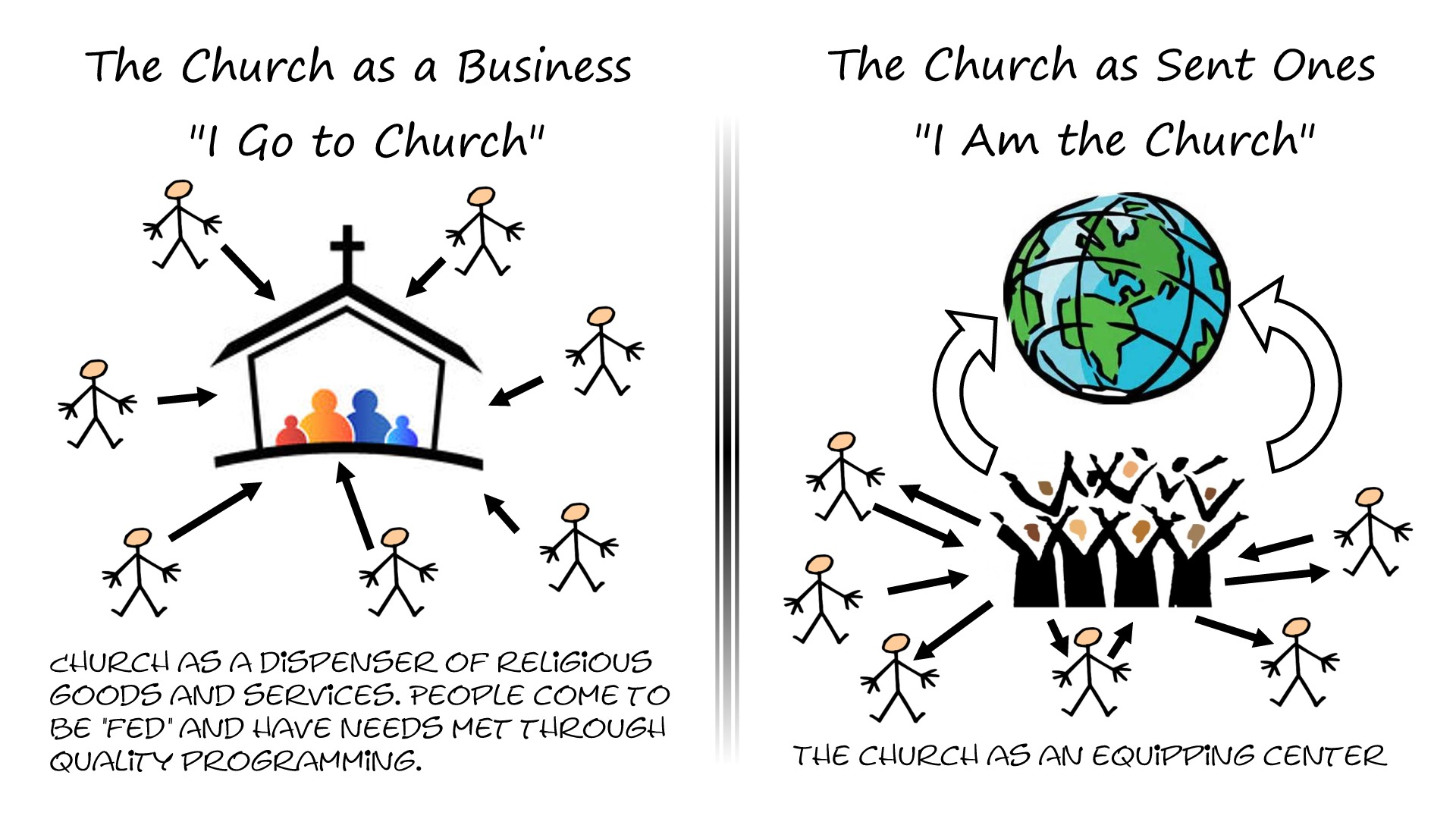
The Missional Church

I love this concept; it’s very simple and looks sneakingly similar to what we see happening in the New Testament. The early church met in homes in their communities (house to house; Acts 2:2, 5:42, Philemon 1:2), not just in a large “church” gathering.

Churches that are in traditional roles in the community will not think like this, perhaps like trying to turn an aircraft carrier (it takes a slow, wide turn). But even in this Navy ship illustration, the ship has to be moving in order to make the turn.

Take a look at this brief missional church video. What do you think? How can we change the “church” mindset toward making disciples who in turn make other disciples (making disciple-makers rather than more believers)?

Here is a video on authentic and biblical discipleship… how can we more effectively make disciples?

There are several questions that must be asked…

  1. Who is doing this?
  2. Where are you doing this?
  3. What is the context of your congregation’s community?
  4. What do you think is the key to transforming your congregation into a fellowship driven by purpose and mission?

What People Will Remember

“I’ve learned that people will forget what you said, people will forget what you did, but people will never forget how you made them feel.”

-Maya Angelou (Author and Poet)

As children we remember most those individuals that made us feel special. Was it a grandmother, a grandfather, a friend, a Sunday School teacher or a neighbor? What was it that they said or did that drew you like a magnet to them? Their words and actions have probably faded away, but you still remember them. Why?

It was the fact that they made you feel important, valued and worth something. Their love was unquestionable and their loyalty was forever.

As an adult, are you willing to be there for others in a way that they will choose to remember how you made them feel? Could you begin today to be that magnet of caring for others?

What Counts in Life?

“Not everything that can be counted counts, and not everything that counts can be counted.”

-Albert Einstein (Theoretical Physicist, 1879-1955)

What do people keep score counting?

  • Personal offenses
  • Failures
  • Money
  • Hours slept
  • Points in games like touchdowns and goals
  • Length of pain
  • Times not chosen
  • Missing items
  • Stolen possessions

Are these items that really matter or make a difference over time? Hardly.

On the other hand, what IS worthwhile in life that matters and counts but cannot be quantified? Try these:

  • Love for one another, joy, peace, patience, kindness, goodness, faithfulness, gentleness and self-control
  • Quality of relationships
  • Depth of friendships
  • Loyalty
  • Wisdom
  • Honesty

How will you spend your time counting during your lifetime? Choose wisely.

Seven Steps to Success

Leadership expert John Maxwell shares Seven Steps to Success:

  1. Make a commitment to grow daily.
  2. Value the process more than events.
  3. Don’t wait for inspiration.
  4. Be willing to sacrifice pleasure for opportunity.
  5. Dream big.
  6. Plan your priorities.
  7. Give up to go up.

Do you want to become a success? How does one become a success and another person does not? The seven steps presented lend credence to a plan for success. Consider incorporating these steps in your daily walk and perhaps your results can confirm the outcome of success.

I like them all but step 4 really speaks to me. Making sacrifices is not usually high on a person’s to-do list. In our microwave culture, we want it now and don’t want it to cost us anything to acquire it.

No Success Without Failure

“I’ve missed more than 9000 shots in my career. I’ve lost almost 300 games. Twenty-six times I’ve been trusted to take the game winning shot and missed. I’ve failed over and over and over again in my life. And that is why I succeed.”

-Michael Jordan (Professional Basketball Player)

Michael Jordan acquired the reputation for being the greatest basketball player of all time. He was inducted into the Basketball Hall of Fame in 2009.

Although Michael acknowledged the numerous times he met failure on the court of his professional sports life, his passionate attitude propelled him into a league of his own.

How many of us have given up on our first few failures? Facing failure constructively means we don’t give in to failure but revs us up for improvement. As you begin your day, “be like Mike.” Recognize failure, build on EVERY failure that comes along and be SUCCESSFUL in whatever you attempt.