Evidence of Salvation

Take a little test that will help reveal to yourself some things about salvation. On a sale of 1-5 rate yourself:

  1. Never true
  2. Rarely true
  3. Sometimes true
  4. Usually true
  5. Always true
  • ____ I have an awareness and brokenness over my sin.
  • ____ I have a hunger for God’s word.
  • ____ I have a desire for living the Christian life of obedience.
  • ____ I have seen an increase in Satan attacking my faith.
  • ____ I have genuine love for others.
  • ____ I have a desire to share my faith with others.
  • ____ I have experienced social pressure or ridicule from non-believing family, friends, classmates, co-works, etc.

We will ALWAYS be growing in these areas, and we will NEVER reach a point where we perfectly do all of these things, but these seven areas are indicators that we are believers and are actively pursuing God. Let’s look at why these are solid evidences of salvation.

1. Brokenness over Sin:

  • 1 John 1:6 “If we claim to have fellowship with him yet walk in the darkness, we lie and do not live by the truth.”
  • 1 John 1:8-10 “If we claim to be without sin, we deceive ourselves and the truth is not in us. If we confess our sins, he is faithful and just and will forgive us our sins and purify us from all unrighteousness. If we claim we have not sinned, we make him out to be a liar and his word has no place in our lives.”

2. Hunger for God’s Word:

  • 1 Peter 2:2 “Like newborn babies, crave pure spiritual milk, so that by it you may grow up in your salvation,”

3. Christian Life Transformation and Obedience:

  • 2 Corinthians 5:17 “Therefore, if anyone is in Christ, he is a new creation; the old has gone, the new has come!”
  • 1 John 2:4 “The man who says, ‘I know him,’ but does not do what he commands is a liar, and the truth is not in him.”

4. Testing, Troubles and Trials in Life:

  • 2 Timothy 3:12 “In fact, everyone who wants to live a godly life in Christ Jesus will be persecuted,”

5. Genuine Love for Others:

  • 1 John 4:7-23 “Dear friends, let us love one another, for love comes from God. Everyone who loves has been born of God and knows God. Whoever does not love does not know God, because God is love. This is how God showed his love among us: He sent his one and only Son into the world that we might live through him. This is love: not that we loved God, but that he loved us and sent his Son as an atoning sacrifice for our sins. Dear friends, since God so loved us, we also ought to love one another. No one has ever seen God; but if we love one another, God lives in us and his love is made complete in us. We know that we live in him and he in us, because he has given us of his Spirit. And we have seen and testify that the Father has sent his Son to be the Savior of the world. If anyone acknowledges that Jesus is the Son of God, God lives in him and he in God. And so we know and rely on the love God has for us. God is love. Whoever lives in love lives in God, and God in him. In this way, love is made complete among us so that we will have confidence on the day of judgment, because in this world we are like him. There is no fear in love. But perfect love drives out fear, because fear has to do with punishment. The one who fears is not made perfect in love. We love because he first loved us. If anyone says, ‘I love God,’ yet hates his brother, he is a liar. For anyone who does not love his brother, whom he has seen, cannot love God, whom he has not seen. And he has given us this command: Whoever loves God must also love his brother.”

6. Desire to Tell Others About Your Faith:

  • Mark 8:28 “If anyone is ashamed of me and my words in this adulterous and sinful generation, the Son of Man will be ashamed of him when he comes in his Father’s glory with the holy angels.”
  • Acts 1:8 “But you will receive power when the Holy Spirit comes on you; and you will be my witnesses in Jerusalem, and in all Judea and Samaria, and to the ends of the earth.”

7. Social Pressure Because of Your Faith:

  • John 15:18 “If the world hates you, keep in mind that it hated me first.”
  • John 17:14 “I have given them your word and the world has hated them, for they are not of the world any more than I am of the world.”
  • 1 John 3:13 “Do not be surprised, my brothers, if the world hates you.”
What Grieves the Holy Spirit?

When it comes to grieving the Holy Spirit, where do we start? We are so disappointing to God at times. Let’s take a look at these grieving actions, starting in Psalm 78:

Forgetting God: “They forgot what he had done, the wonders he had shown them” (Psalm 78:11). God freed the Israelites from captivity, parted the Red Sea, provided bread in the desert, and led His people to a prosperous land. “In spite of all this, they kept on sinning” (Psalm 78:32). God lamented, “Can a mother forget the baby at her breast and have no compassion on the child she has borne? Though she may forget, I will not forget you” (Isaiah 49:15). But “you deserted the Rock, who fathered you; you forgot the God who gave you birth” (Deuteronomy 32:18).

Grumbling: “They spoke against God” (Psalm 78:19). Daily, God provided the Israelites with the “bread of angels,” but they weren’t satisfied and whined for more. Their complaints made God “exceedingly angry” (Numbers 11:10).

  • Miriam and Aaron criticized Moses, God’s appointed leader. “The anger of the LORD burned against them, and he left them,” and Miriam became leprous (Numbers 12:9).
  • When God allowed the Israelites to glimpse the glory of the promised land, they grumbled about the great size of the people instead of being grateful for the great size of the grapes. God sighed, “How long will this wicked community grumble against me?” (Numbers 14:27).

Disobedience: “They did not keep God’s covenant and refused to live by his law” (Psalm 78:10). “Again and again they put God to the test; they vexed the Holy One of Israel” (Psalm 78:41). The Israelites’ repeated disobedience saddened God. “How long will you refuse to keep my commands and my instructions?” He asked (Exodus 16:28).

Disbelief: “They did not believe in God or trust in his deliverance” (Psalm 78:22). Ten times God is described in Psalm 78 as being angry, grieved, or vexed. Disturbed by their lack of faith, God cried, “How long will these people treat me with contempt? How long will they refuse to believe in me, in spite of all the miraculous signs I have performed among them?” (Numbers 14:11).


God’s Old Testament warning, “do not grieve the Holy Spirit,” is repeated in the New Testament in Ephesians 4:30, but the emphasis is different. In the Old Testament, grieving the Spirit was connected to the people’s response to God. In the New Testament, grieving the Spirit also includes our response to one another in the Body of Christ. Paul explains this in Ephesians 4:29–32 when he illustrates how we can keep from grieving the Spirit:

  • Avoid unwholesome talk
  • Build others up rather than yourself
  • Share
  • Rid yourself of bitterness, rage, anger, brawling, and slander
  • Be compassionate

The consistent goal of the Spirit in the New Testament is that we achieve unity by maintaining right relationships with one another and using our gifts to serve the body of Christ (Ephesians 4:12–13, John 17:23). Paul tells us in Ephesians 4:3, “Make every effort to keep the unity of the Spirit.”

But the church in Jesus’ day lacked both service and unity, due in large measure to the ruling religious sect, the Pharisees (literally meaning “the separated ones”). By Jesus’ day it appeared that the Pharisees had set themselves apart because they secretly believed they were spiritually superior to others. Jesus called them vipers, fools, and blind guides. Stephen included them in his description of those who “always resist the Holy Spirit” (Acts 7:51).

Why was God so upset with these leaders? The reasons should be of concern to us because we grieve the Holy Spirit if we are guilty of these same sins.

Pride: The Pharisees demanded seats of honor at public events. They loved the esteem of the people and being called “Rabbi.” They expected to be served, rather than to serve. Jesus exposed their arrogance in a parable that portrayed a Pharisee as boasting, “God, I thank you that I am not like all other men” (Luke 18:11).

Self-effort: The Pharisees trusted in their good works to make them righteous, rather than in God. They erroneously believed they could achieve spiritual blessing through the effort of the flesh.

  • Jesus said, “Flesh gives birth to flesh, but the Spirit gives birth to spirit.” (John 3:6).
  • “Cursed is the one who trusts in man, who depends on flesh for his strength” (Jeremiah 17:5).
  • “Apart from me you can do nothing” (John 15:5).

Scripture condemns all self-effort and warns us to beware of our tendency to act independently of God. “Are you so foolish? After beginning with the Spirit, are you now trying to attain your goal by human effort?” (Galatians 3:3).

Resistance to the Spirit: “Do not put out the Spirit’s fire; do not treat prophecies with contempt” (1 Thessalonians 5:19–20). Guilty on both counts, the Pharisees doused the flames of the Spirit by attributing Jesus’ works to Satan (Matthew 12:25–32) and thumbing their noses at the Scriptures concerning Christ.

Hypocrisy: The Pharisees were spiritual leaders with no Spirit. They professed to know God yet they failed to recognize His own Son. They put demands upon others they were unwilling to accept themselves.

  • Jesus warned, “Do not do what [the Pharisees] do, for they do not practice what they preach” (Matthew 23:3).
  • “Woe to you, teachers of the law and Pharisees, you hypocrites! You are like whitewashed tombs . . . on the outside you appear to people as righteous but on the inside you are full of hypocrisy and wickedness” (Matthew 23:27–28).
  • Jesus’ final analysis was sad: “These people honor me with their lips but their hearts are far from me” (Mark 7:6).

Legalism: Intellectualism was the god of the Pharisees. Consumed with order, tradition, and doctrine, they so immersed themselves in the study of God’s Law and the explanation of it that they ended up missing God Himself! When the Pharisees scolded Jesus’ disciples for failing to wash their hands before eating, Jesus rebuked them, “You nullify the word of God for the sake of your tradition” (Matthew 15:6).

In their zeal for theological correctness, the Pharisees reduced religion to a purely intellectual exercise, effectively squelching the Spirit and eliminating responses of the heart.

  • As a result, their hearts were hardened (Mark 3:5).
  • Jesus said angrily, “Woe to you . . . you have neglected the more important matters of the law —justice, mercy and faithfulness” (Matthew 23:23).
  • Paul, himself a Pharisee, recognized the dangers of legalism and rightly warned, “The letter kills, but the Spirit gives life” (2 Corinthians 3:6).

Grieving the Spirit carries serious consequences:

  • The actions of the Israelites grieved the Spirit, and God withdrew His protection and fought against them (Isaiah 63:10, Acts 7:42–43).
  • The attitudes of the Pharisees grieved the Spirit and they were condemned to hell (Matthew 23:13, 23:33).
  • The most common result of grieving the Spirit in the Old Testament was simply that He left. Prior to Pentecost, the Spirit was given to selected individuals for a temporary period of time. That is why David, who experienced the coming and going of the Spirit in his own life, pleaded in Psalm 51:11, “Do not . . . take your Holy Spirit from me.”

Today, the Spirit works differently. When we mean business with God, the moment a person comes to Christ, he is immediately sealed by the Holy Spirit (Ephesians 1:13–14, John 14:16). We don’t question our eternal destiny or doubt God’s intentions toward us (1 John 4:16). The Spirit does not leave us, but if we grieve Him, He may temporarily withdraw fellowship for a time until we come back on track.

God prefers that we are continually aware of the Holy Spirit’s indwelling presence and sensitive to how deeply sin affects Him, and us. It is good to understand the biblical theology of grieving the Spirit. It helps when we are able to feel God’s sorrow over sin, but the surest way to avoid grieving the Spirit is to know Him and walk in a moment-by-moment, love relationship with Him.

[print_link] [email_link]

The Missional Church

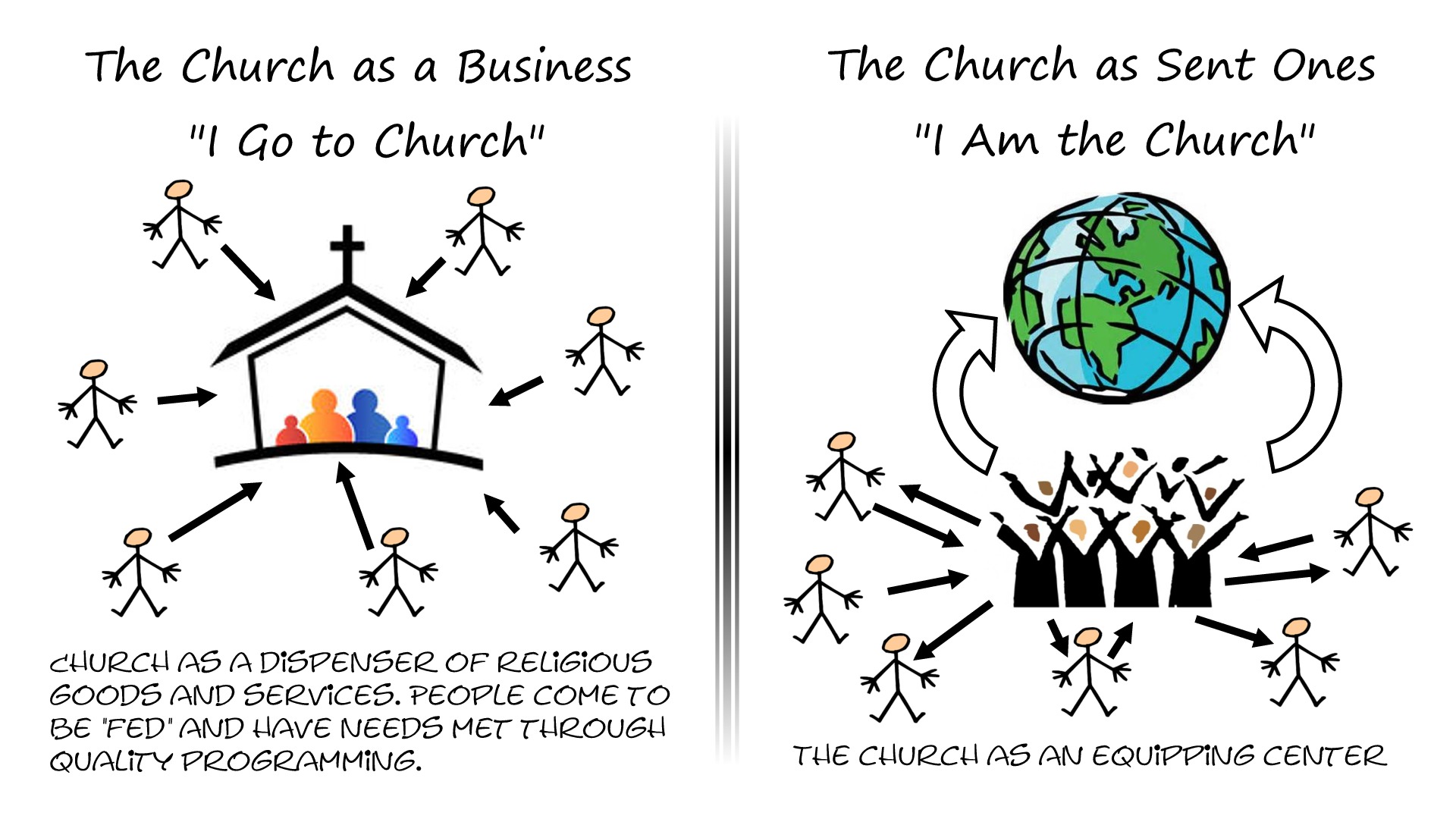
I love this concept; it’s very simple and looks sneakingly similar to what we see happening in the New Testament. The early church met in homes in their communities (house to house; Acts 2:2, 5:42, Philemon 1:2), not just in a large “church” gathering.

Churches that are in traditional roles in the community will not think like this, perhaps like trying to turn an aircraft carrier (it takes a slow, wide turn). But even in this Navy ship illustration, the ship has to be moving in order to make the turn.

Take a look at this brief missional church video. What do you think? How can we change the “church” mindset toward making disciples who in turn make other disciples (making disciple-makers rather than more believers)?

Here is a video on authentic and biblical discipleship… how can we more effectively make disciples?

There are several questions that must be asked…

  1. Who is doing this?
  2. Where are you doing this?
  3. What is the context of your congregation’s community?
  4. What do you think is the key to transforming your congregation into a fellowship driven by purpose and mission?

God’s Greatness and Service

So, just how can we get people to take the call of God seriously? I’m not talking about God calling them to salvation, but God calling people to a live of sacrificial service. Why is volunteerism dead in so many places? What will it take to get people on board with God’s purpose and mission in the world?

As you read through the Bible, you’ll notice that whenever people come face to face with God’s greatness, the next scene often shows them on mission.

  • Moses trembles before God in the burning bush. Next he is standing before Pharaoh saying, “Let my people go!” The majesty of God displayed before Moses’ eyes on a faraway hillside is the same majesty God displays before the greatest empire of the day.
  • Isaiah caught a vision of the Lord in His temple that was so staggering that he fell on his face like a dead man. Notice God didn’t even have to tell him what to do. God simply asks, “Who shall go?” and the awestruck Isaiah volunteers: “Here am I. Send me!”
  • The Samaritan woman at the well was amazed at the supernatural knowledge of Jesus. Next we see her running into town telling her friends and family about His greatness.
  • The women at the tomb are the first to witness the resurrection power of God. Next we see them telling everyone, “We have seen the Lord!”
  • Peter denies Christ and hides. After encountering the greatness of King Jesus, we see him boldly proclaiming Christ as Messiah and Lord before thousands of people.
  • Paul has an encounter with the risen Jesus, and then he spends the rest of his life seeking to help the Gentiles see the very One who initially blinded him.

Why should it be any different with us? Missional fruitfulness comes from a heart gripped by God’s greatness and overwhelmed with His grace.

May we be so mesmerized by the glory of Jesus Christ that we count it as nothing to lose our lives for the spread of His fame! Let’s get on our faces before God and then get on our feet for His mission.

[print_link] [email_link] [Trevin Wax]

Marks of a Disciple

A lot of people talk about being followers of Christ, and about being disciples. But what characterizes a disciple? What does a disciple look like? How can we give ourselves a “spiritual check-up” to ensure that we’re still on the path of discipleship, and not just giving lip service to the concept?

Lorne Sanny, former president of The Navigators, used to talk about three characteristics of those who are true followers of Christ. He called them the marks of a disciple. Here’s a brief summary of his thoughts that can help you as you seek to live as Jesus’ disciple today.

Identified with Christ: The first mark of a disciple is that he is someone who is identified with the person of Jesus Christ, someone who will openly admit that he belongs to Christ. On one occasion Jesus asked the disciples, “Who do you say that I am?” Peter answered, “You are the Christ” (Mark 8:29). It seems that everything in His ministry led up to this. He then began to teach them that the Son of Man must suffer many things and be rejected by the elders, chief priests and teachers of the law, and that he must be killed and in three days rise again (Mark 8:31). A disciple takes the opportunity to identify himself with Jesus Christ.

Obedient to the Word: A disciple is not only a believer who is identified with the person of Christ, he is also obedient to the Word of Christ, to the Scriptures. Therefore go and make disciples of all nations . . . teaching them to obey everything I have commanded you (Matthew 28:19,20). A disciple does more than attend meetings. He does more than take notes. He finds out what the Bible says and does it. We need to make up our minds that, God helping us with the power of the Holy Spirit, we are going to be obedient to the Word of Christ.

Fruitful for Christ: So a disciple is one who is openly identified with the person of Christ. Second, he is obedient to the Word of Christ. And third, he is bearing fruit in the work of Christ. This is to my Father’s glory, that you bear much fruit, showing yourselves to be my disciples (John 15:8). Now it seems to me that there are two kinds of fruit here.

  1. First is the fruit of character, the fruit of the Spirit: love, joy, peace, patience, kindness, goodness, faithfulness, gentleness, and self-control (Galatians 5:22,23).
  2. Second, there’s fruit by way of influencing the lives of others for Christ. You did not choose me, but I chose you and appointed you to go and bear fruit, fruit that will last (John 15:16).

Let’s ask ourselves: Am I a true disciple? Am I willing to be openly identified with the person of Jesus Christ? Am I seeking to be obedient to the Word of Christ in my everyday life? Am I bearing fruit in the work of Christ, by way of Christlike character and by influencing the lives of others?

I want to be a disciple. I want to have these marks and characteristics in my life. The only thing I’d like to do beyond that is to help make disciples and to get them to help make others. That’s what Jesus wants done.

I found this information from the Navigators.

Portrait of the Lukewarm

I’ve been reading Crazy Love, by Francis Chan, which is simply one of the “must read” books on my list. I see so often men just limping along in their spiritual lives, with no power, determination, passion or calling to rise up to what God wants them to be. What would it look like for men to be totally sold out to Christ, and actually take his commands seriously?

Chan gives a portrait of what a lukewarm person looks like, so I will only mention the points, but for his commentary, please buy his book.

He challenges us as we look at the parable of the sower, that if we are believers in Christ, DO NOT assume that you are the good soil. How often do we allow the worries, cares and distractions of the world change our course and effectively choke out the life that is in us? I suspect that most American Christians may be what Jesus called, “thorny ground.”

Where do we read about lukewarm people? In the Revelation of John.

‘I know your deeds, that you are neither cold nor hot; I wish that you were cold or hot. So because you are lukewarm, and neither hot nor cold, I will spit you out of My mouth. Because you say, “I am rich, and have become wealthy, and have need of nothing,” and you do not know that you are wretched and miserable and poor and blind and naked,” (Revelation 3:15-17)

So here is Francis Chan’s profile of the lukewarm:

  1. Lukewarm people attend church fairly regularly, doing what is expected of them since “good Christians” go to church, so they go (Isaiah 29:13)
  2. Lukewarm people give money to charity and the church, out of their extra,  as long as it doesn’t impede their lifestyle (1 Chronicles 21:24, Luke 21:1-4)
  3. Lukewarm people choose what is popular over that which is right, they want to fit in and are concerned what people think about them (Luke 6:26, Revelation 3:1, Matthew 23:5-7)
  4. Lukewarm people don’t really want to be saved from their sin, they want to be saved from the penalty of their sin, and are not convinced that the new life Jesus offers is better than the old sinful life (John 10:10, Romans 6:1-2)
  5. Lukewarm people are moved by stories of people who do radical things for God, yet they do not act; they belief that behavior is for extreme Christians (James 1:22, 4:17, Matthew 21:28-31)
  6. Lukewarm people rarely share their faith, they don’t want to be rejected or uncomfortable by talking about private religion (Matthew 10:32-33)
  7. Lukewarm people gauge their morality or goodness by comparing themselves to the secular world, I’m not as bad as so-and-so (Luke 18:11-12)
  8. Lukewarm people say they love Jesus, but he is only a part of their lives, sections, but not control of their lives (Luke 9:57-62)
  9. Lukewarm people love God, but not with their whole heart, mind, soul and strength; total devotion is reserved for pastor type people and radicals (Matthew 22:37-38)
  10. Lukewarm people love others, but do not seek to love others as much as themselves, loving those who love them in return (Matthew 5:43-47, Luke 14:12-14)
  11. Lukewarm people will serve God and others, but there are limits to the amounts of time, money and energy they give (Luke 18:21-25)
  12. Lukewarm people think more about life on earth than eternity in heaven (Philippians 3:18-20, Colossians 3:2)
  13. Lukewarm people are thankful for their comforts and give little to help the poor (Matthew 25:34, 40, Isaiah 58:6-7)
  14. Lukewarm people do whatever is necessary from feeling too guilty, they like “good enough” (1 Chronicles 29:14, Matthew 13:44-46)
  15. Lukewarm people are concerned with playing it safe, slaves to the god of control (1 Timothy 6:17-18, Matthew 10:28)
  16. Lukewarm people feel secure because they attend church, professed faith at age 12, vote Republican, or live in America (Matthew 7:21, Amos 6:1)
  17. Lukewarm people do not live by faith, their lives are structured so they don’t have to (Luke 12:16-21, see also Hebrews 11)
  18. Lukewarm people think and swear less than the average person, besides that their lives are not much different than typical unbelievers (Matthew 23:25-28)

The challenge is to count the cost of following Jesus (Luke 9:23), and take a self-evaluation inventory of where you are with Christ (Luke 14:31-33, 34-35)

[print_link] [email_link]

Characteristics of Genuine Faith

There is a lot of talk about what a disciple of Jesus looks like, you can see that in previous posts:

  1. What does a disciple look like?
  2. How can you spot a disciple of Jesus?

I thought that these passages of Scripture help define genuine faith of a follower of Christ:

Evidence that proves nothing (for or against having faith):

  1. Visible morality (Matthew 19:16-21, 23:27)
  2. Intellectual knowledge (Romans 1:21, 2:17-29)
  3. Religious involvement (Matthew 25:1-10)
  4. Ministry involvement (Matthew 7:21-24)
  5. Conviction of sin (Acts 24:25)
  6. A past decision (Luke 8:13-14)

Evidence (or Fruit) of Authentic Faith:

  1. Love for God (Psalm 42:1, 73:25, Luke 10:27, Romans 8:7)
  2. Repentance from Sin (Psalm 32:5, Proverbs 28:13, Romans 7:14-25)
  3. Genuine Humility (Psalm 51:17, Matthew 5:1-12, James 4:6, 9-10)
  4. Devotion to God’s Glory (Psalm 105:3, 115:1, Isaiah 43:7, 48:10-11, Jeremiah 9:23-24, 1 Corinthians 10:31)
  5. Continual Prayer (Luke 18:1, Ephesians 6:18-19, Philippians 4:6-7, 1 Timothy 2:1-4, James 5:16-18)
  6. Selfless Love (1 John 2:9-11, 3:14, 4:7-12)
  7. Separation from the World (1 Corinthians 2:12, James 4:4, 1 John 2:15-17, 5:5)
  8. Spiritual Growth (Luke 8:15, John 15:1-6, Ephesians 4:12-16)
  9. Obedient Living (Matthew 7:21, John 15:14, 16, Romans 16:26, 1 Peter 1:2, 22, 1 John 2:3-5)
  10. Hunger for God’s Word (1 Peter 2:1-3)
  11. Transformation of Life (2 Corinthians 5:17)

If the first list is true and the second list is false, there is cause to question one’s profession of faith. However, if list two is true, then the first list will also be true. So, how does the gospel active in one’s life manifest itself?

The Living Out of the Gospel:

  1. Proclaim it (Matthew 4:23)
  2. Defend it (Jude 1:3, 1 Peter 3:15)
  3. Demonstrate it (Philippians 1:27)
  4. Share it (Philippians 1:5)
  5. Suffer for it (2 Timothy 1:8)
  6. Preach it (1 Corinthians 9:16)
  7. Guard it (Galatians 1:6-8)
  8. Don’t Hinder it (1 Corinthians 9:12)
  9. Don’t be Ashamed of it (Romans 1:16)
  10. Be Empowered by it (1 Thessalonians 1:5)

My challenge is for all of us to live what we profess to believe. We cannot play games any longer; it’s time to do business with God. Allow the Holy Spirit to change us from the inside out. The credibility of the message will never exceed the credibility of the messenger. The world is watching, and don’t let them turn away from Christ simply because of what they see happening in the lives of Jesus’ followers. People WILL judge a book (Jesus) by its cover (his followers).

 [print_link] [email_link]

Applying Scripture is Not Easy

Read this today and it seems right on target:

Applying Scripture to our lives isn’t easy. Think about it, if it were easy, more people would be doing it. Most people who read the Bible don’t really apply what they read to their lives. Why? Because it’s hard work!

So what makes applying God’s Word so hard? Here are three reasons it’s hard for you and me to apply Scripture to our lives.

Application Requires Serious Thought:
It takes long periods of concentrated prayer and thought before you can apply the Scripture you’re learning. You won’t always understand the application immediately. You have to think about what you’ve read. You have to meditate on it. That takes time most people often don’t want to give.

Satan Fights Application:
The devil’s strongest attacks are going to come in your personal devotional time when you’re trying to apply what you’ve studied. Satan knows that as long as you’re content with merely hearing the Word or reading the Word, you are not much of a threat to his plans. But as soon as you get serious about making changes in your life, he’s going to fight you tooth and nail because he hates doers of the Word (James 1:22).

We Naturally Resist Change:
It’s human nature; no one likes to change. But that’s God’s main purpose with his Word; he wants it to transform our lives. He wants to make us more like Jesus. The key to making us more like Jesus is applying God’s Word. That’s why most churches focus on interpreting Scripture and learning about the Bible’s background. Most people are happy to do that. You can learn all about the people of the Bible, the background of the Bible, and the doctrines of the Bible, and still live like the rest of the world. We’re happy to apply God’s Word to other people, but we don’t like doing it to ourselves.

We grow spiritually and become mature Christians by applying God’s Word to our lives. You and I need to ask the Holy Spirit to give us the strength, because we don’t have the strength on our own to obey (John 15:5). The Bible calls us to ask God to empower us through his Spirit: “I pray that from his glorious, unlimited resources he will empower you with inner strength through his Spirit” (Ephesians 3:16).

These obstacles will get in our way every time when we act in our own power, but God has “unlimited resources” to help us apply his Word to our lives. We just have to ask him.

So, what are the distractions today that are keeping you from deeper meditation on God’s Word? When you pray for strength, God may use people in your life to provide the support you need. Do you have people in your life with whom you share your struggles and who will hold you accountable to grow spiritually?

[print_link] [email_link]

Being a Disciple of Jesus

This is a poem written by Jefferson Bethke to highlight the difference between Jesus and false religion. In the Bible, Jesus received the most opposition from the most religious people of his day. At it’s core Jesus’ gospel and the good news of the Cross is in pure opposition to self-righteousness/self-justification.

Religion is man centered, Jesus is God-centered. This poem highlights his journey to discover this truth. Religion either ends in pride or despair. Pride because you make a list and can do it and act better than everyone, or despair because you can’t do your own list of rules and feel “not good enough” for God.

With Jesus though you have humble confident joy because He represents you; you don’t represent yourself. His sacrifice is perfect, putting us in perfect standing with God!

[ Go to the Jefferson Bethke Facebook Page ]

[ 1-888-Need-Him ]

[print_link] [email_link]

Being a Bible Teacher

One thing I have emphasized in our discipleship ministry is that we are not just to be teachers of the Bible in our classes; we are to be shepherds of people. Besides, we don’t really teach the Bible anyway, we teach people the Bible. Josh Hunt sent this article out this week (by Elmer Towns) and it captures what I have emphasized over the years:

A Sunday School teacher is not just an instructor, like a saved public school teacher who is teaching the Bible. A Sunday School teacher has a much broader task than just communicating biblical truth.

[ Here is a video series on Shepherding God’s People ]

A Teacher Teaches People
There are two expressions of the spiritual gift of teaching.

  1. The first is the gift of teaching where the person has a desire to study, to discover new truth, then communicate it in the instructing process. This is not the gift that best describes the Sunday School teacher, though many Sunday School teachers have this gift.
  2. The second gift is the “pastor-teacher” described in Ephesians 4:11, “And He Himself gave . . . some pastors and teachers.” The pastor-teacher uses instruction to nurture his pupils. Even though the King James Version separates the two words, “pastors, and teachers,” the Greek language joins them as one function. The pastor is a teacher.

That brings us to the next step.

A Teacher Shepherds People
A Sunday School teacher is a shepherd. A woman who has four small children around a table in a church basement should be doing a lot more than telling Bible stories about baby Moses in the bushes, or Noah’s ark. She should be giving spiritual care to her students, which involves telling Bible stories. Just as a pastor shepherds his flock in more ways than preaching, so a Sunday School teacher cares for the Sunday School flock in more ways than teaching.

Everything the pastor is to his flock, the teacher is to his Sunday School class. The same Greek word is used for pastor and shepherd, suggesting their work is similar.

A Teacher is the Pastor’s Extension
The Sunday School teacher is the extension of pastoral ministry into the life of the class. Just as an extension helps you get to hard-to-reach places, so a Sunday School teacher helps the pastor reach hard-to-reach people (at least hard for him to reach). A pastor can’t always reach down to a three-year-old boy, but a Sunday School teacher can. Classes need to be more than content centers, they need to be shepherding centers.

The Apostle Paul’s advice to the pastors of the church at Ephesus is also a challenge to Sunday School teachers today. “Therefore take heed to yourselves and to all the flock, among which the Holy Spirit has made you overseers, to shepherd the church of God, which He purchased with His own blood. For I know this, that after my departure savage wolves will come in among you, not sparing-the flock. . . . Therefore watch” (Acts 20:28-31). Notice the three words that are emphasized in these verses. These words contain the threefold job description of a pastor or Sunday School teacher.

  1. First, he is to oversee the flock, which is leading sheep.
  2. Second, he shepherds or feeds the flock, which is giving instruction.
  3. Third, he protects the flock by watching over them.

A Teacher is a Leader
How does the Sunday School teacher “shepherd” the flock in his care? He does so by fulfilling the three primary functions of the shepherd. First, a shepherd leads the flock. The greatest influence of many Sunday School teachers has been the result of their leading by example.

A Teacher is a Feeder
Second, a shepherd feeds the flock. While good Bible teaching will not guarantee your class will grow, poor teaching will hinder its growth

A Teacher is a Protector
Finally, a shepherd protects the flock. Jesus told Peter to ‘tend My sheep” (John 21:16). A Sunday School teacher visits the students who are absent to protect them from falling away. One of the best known and loved passages in all Scripture is the Twenty-third Psalm. In this passage, David describes the care he received at the hand of his Shepherd, the Lord. The example of the Lord who is our Shepherd is a constant challenge to the Sunday School teacher who is trying to be to his class what the Lord is to him.